Culture Design
Employee Experience
Values & Behaviours Campaign
Role: Strategic Visual Design & Experience Design
Duration: 3 weeks
Project Type: Internal Culture Campaign | Print & Physical Assets
Industry: Food & Agriculture
Organisation: Olam Agri
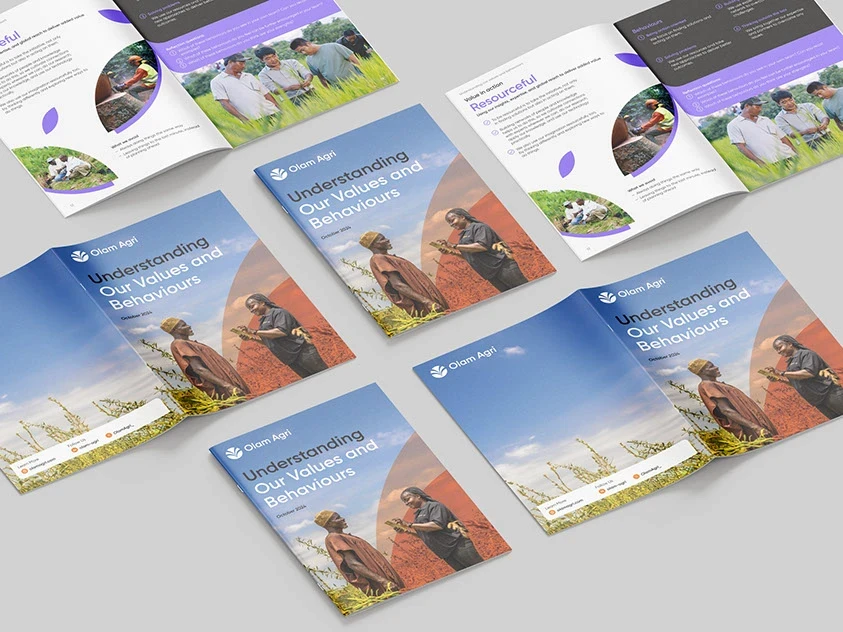
Olam Agri had just emerged from the Olam Group with five new core values: Collaboration, Agile, Resourceful, Entrepreneurial, and Sustainable. But defining values on paper is one thing – actually living them is another.
The Challenge & Goal
Employees understood what the values were, but not what they meant in practice or how to apply them in day-to-day decisions.
With a chance to design for employee experience at scale, the goal was to move values from corporate narrative into the lived reality of everyday work.
How I Approached It
I took a service design mindset to this – viewing the entire year as a customer journey with distinct touchpoints, each designed to deepen understanding and encourage adoption.
Key Design Principles:
Human-centered
Every asset was built around how people actually engage with ideas
Multi-touchpoint
One booklet wouldn't cut it. We needed to meet people where they already work
Interactive
Values come alive when people do something with them, not just read about them
Scalable
The system had to work across a diverse organisation in a print-first environment
We moved from abstract corporate language to tangible, workplace scenarios that made values feel real.
The Solution
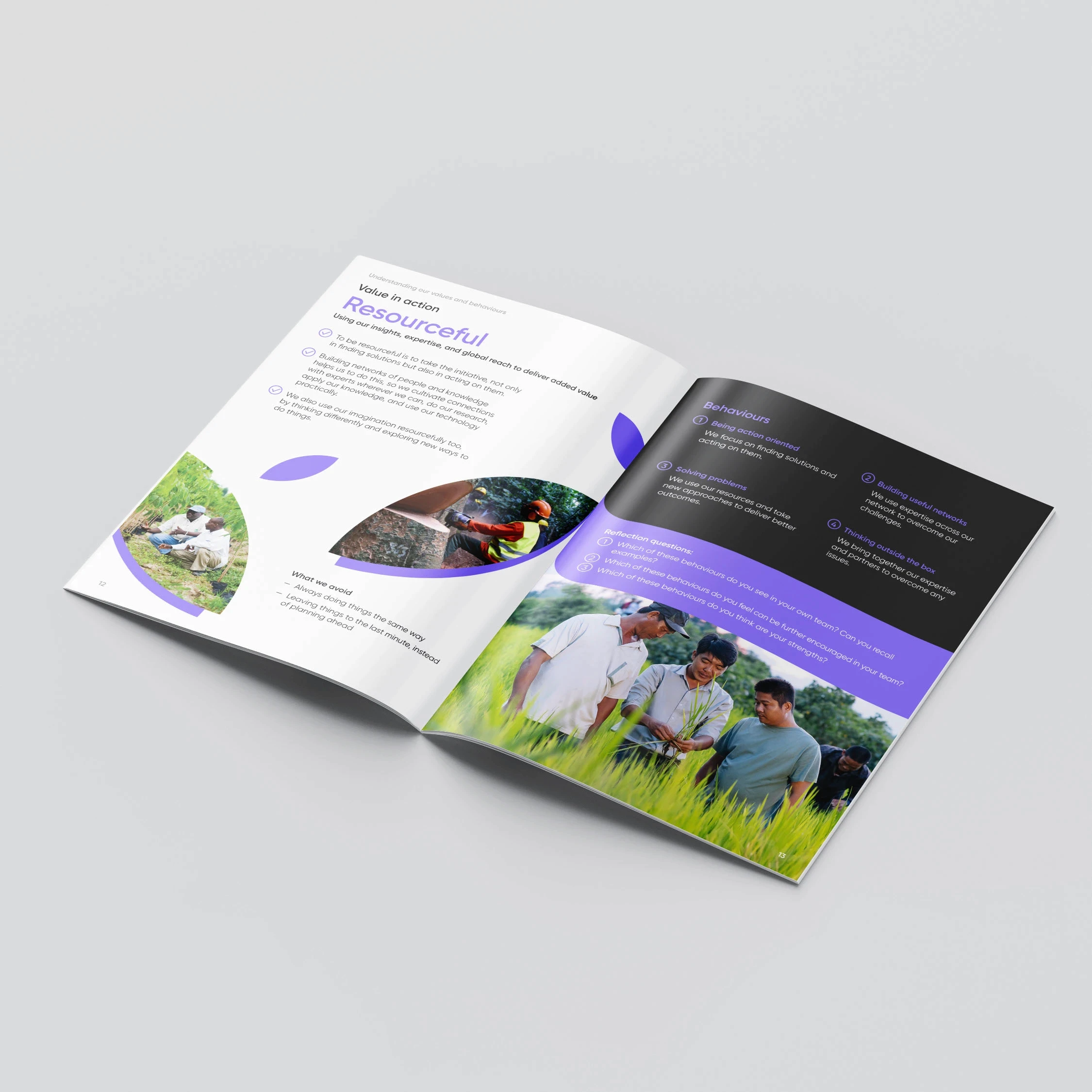
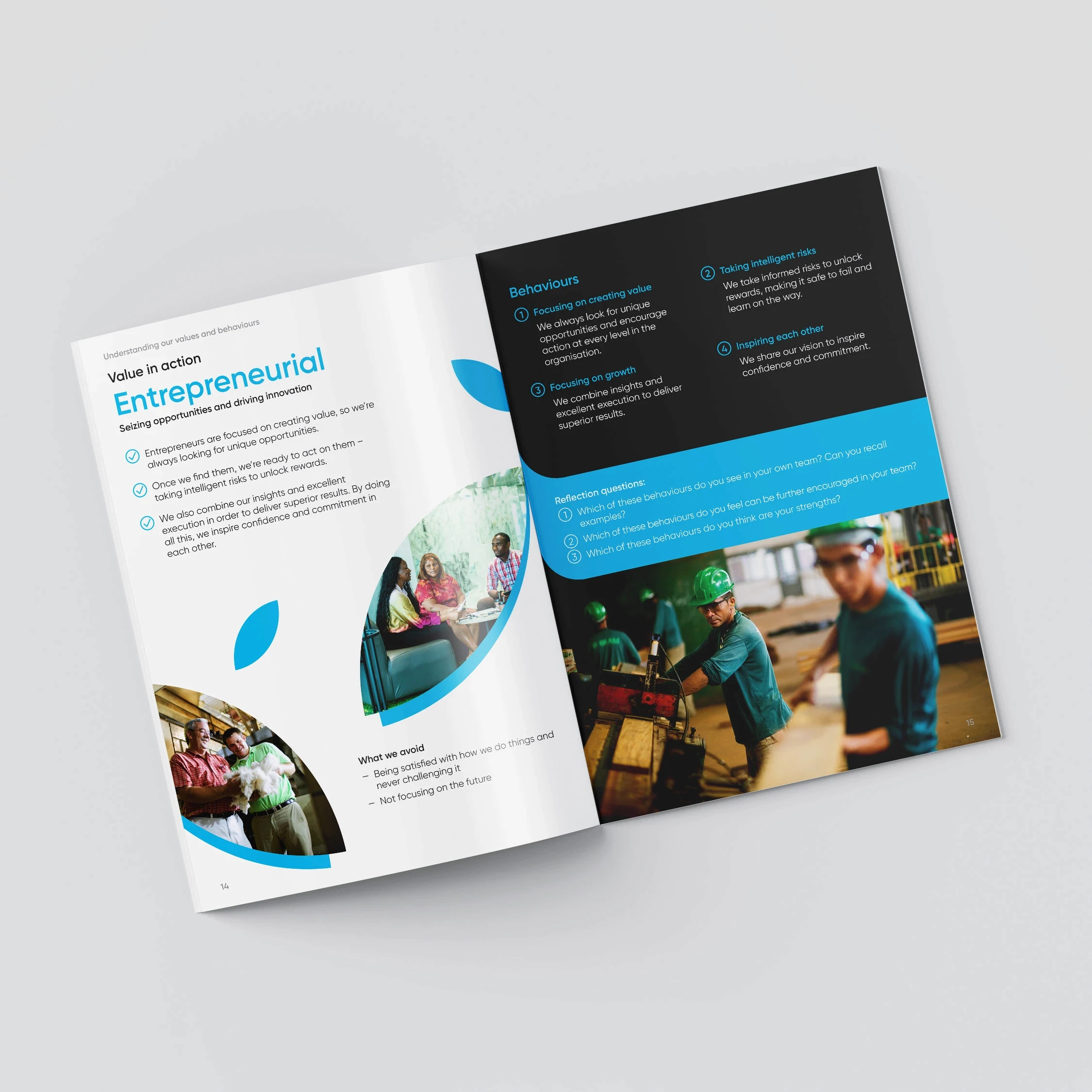
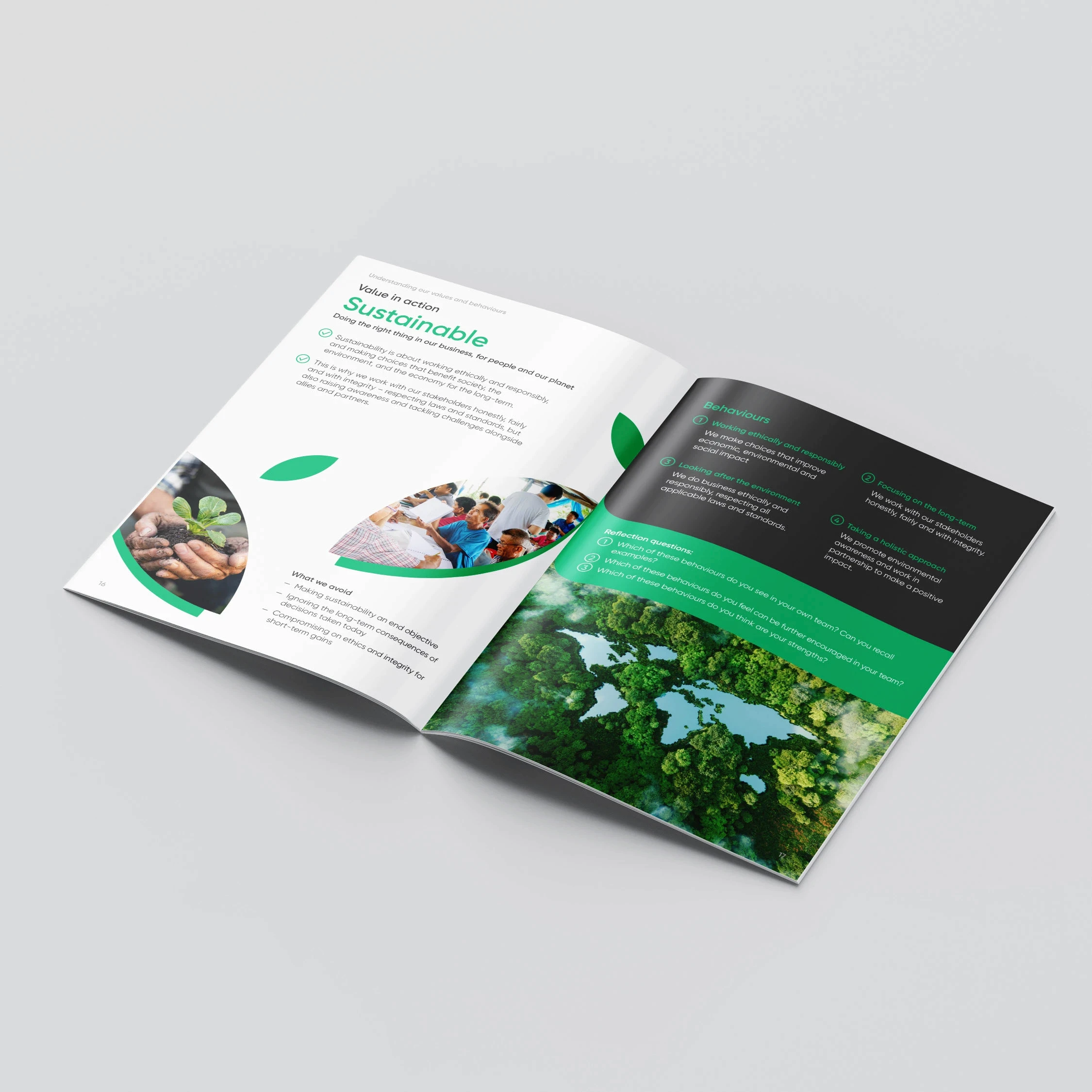
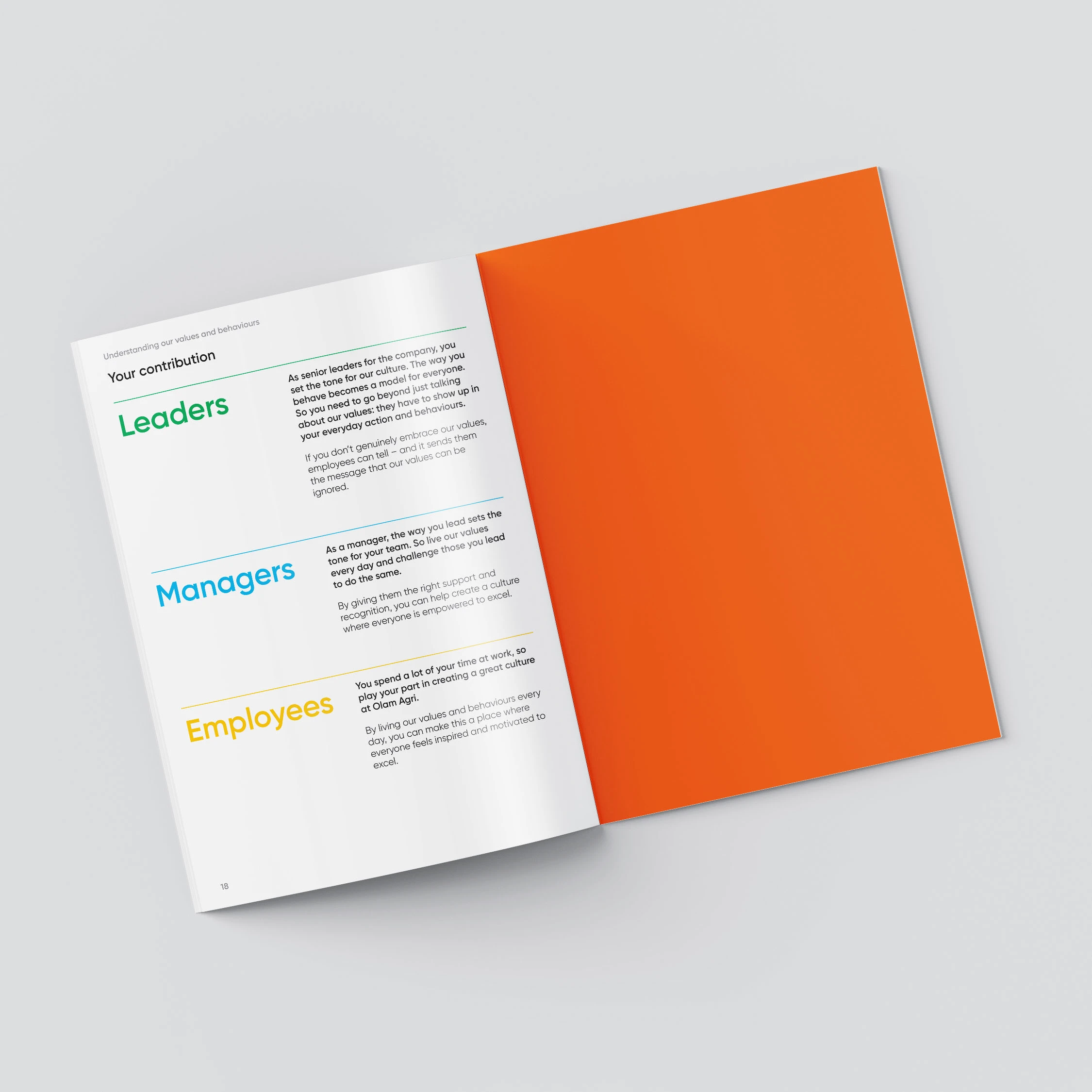
The Values & Behaviours Booklet
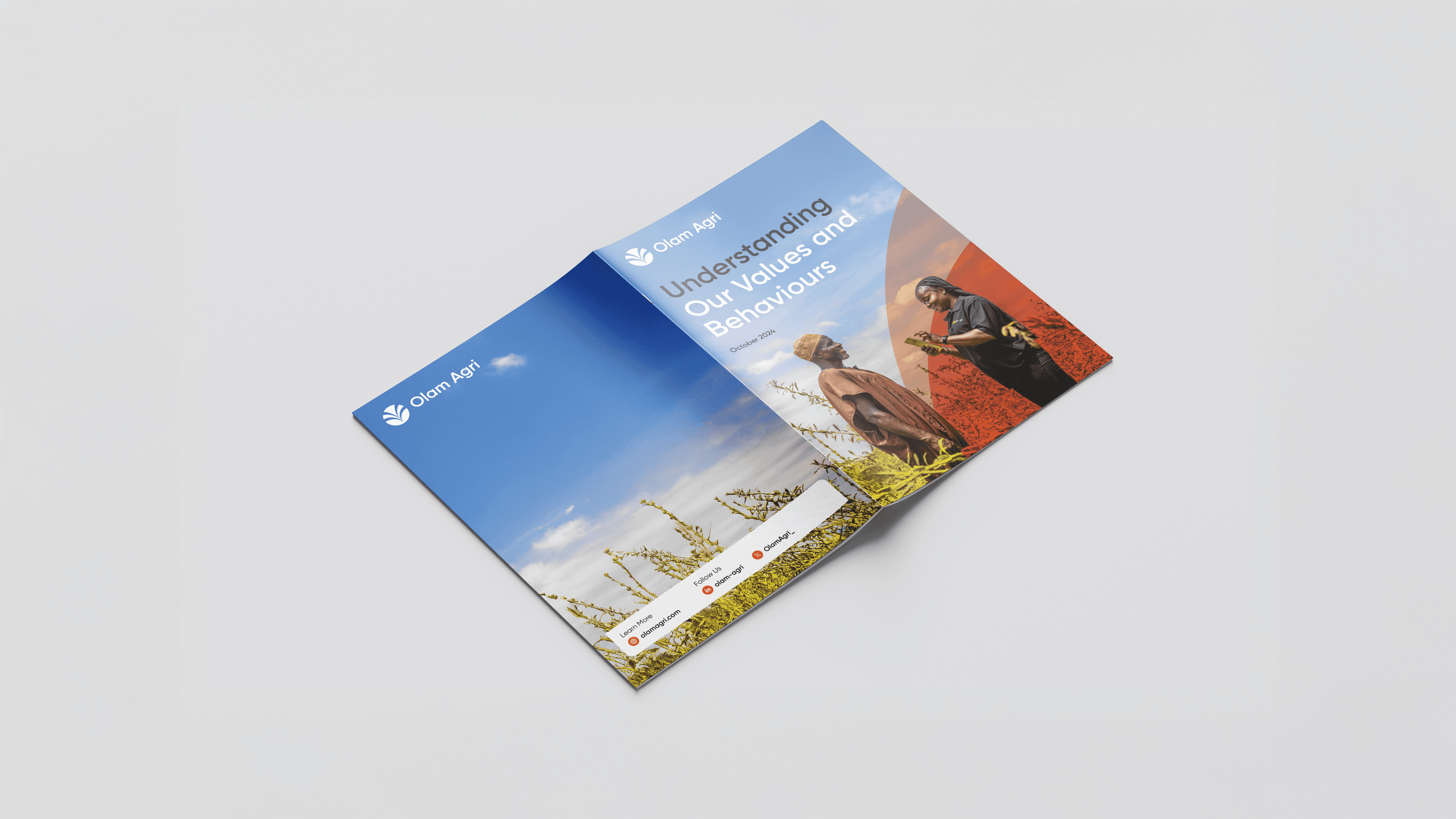
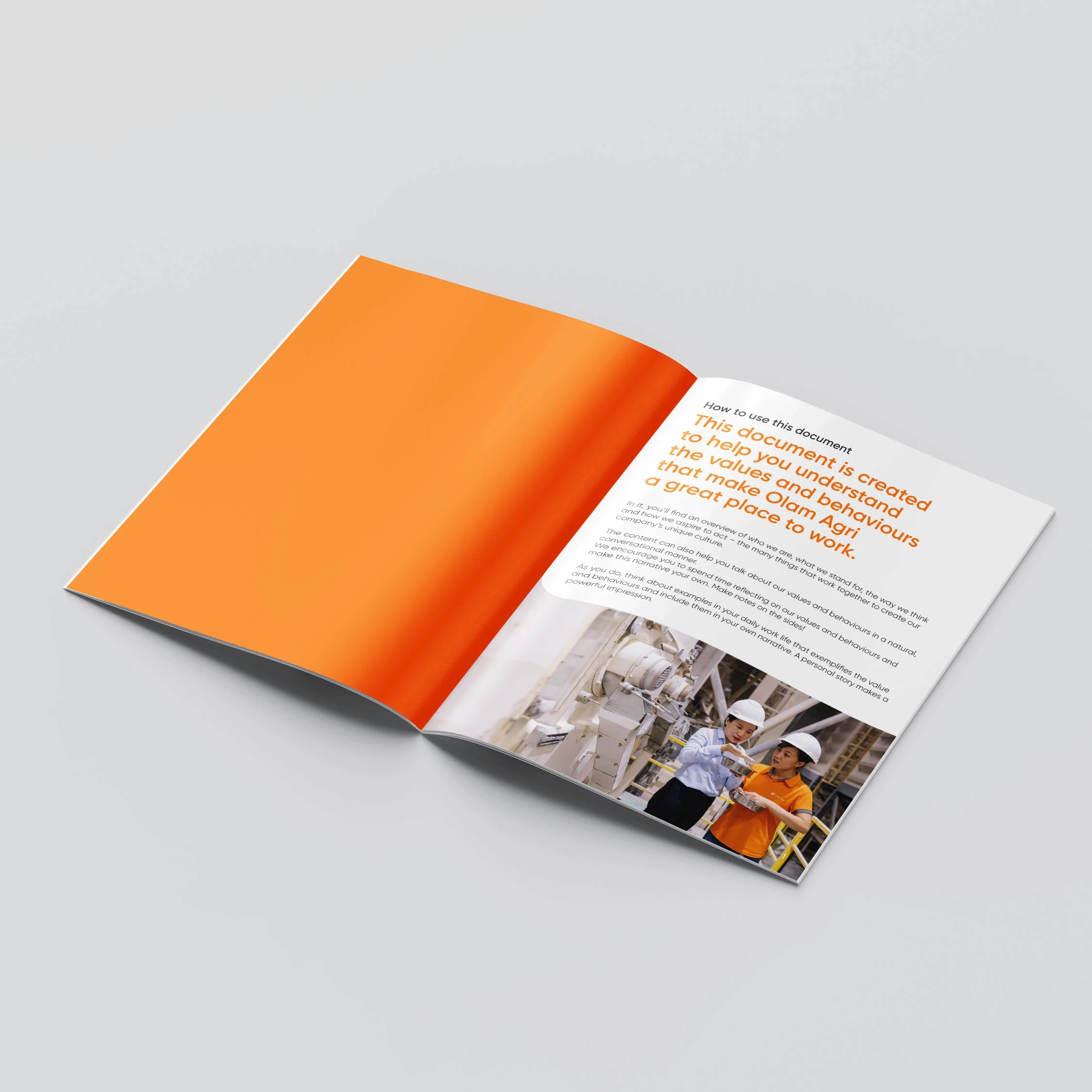
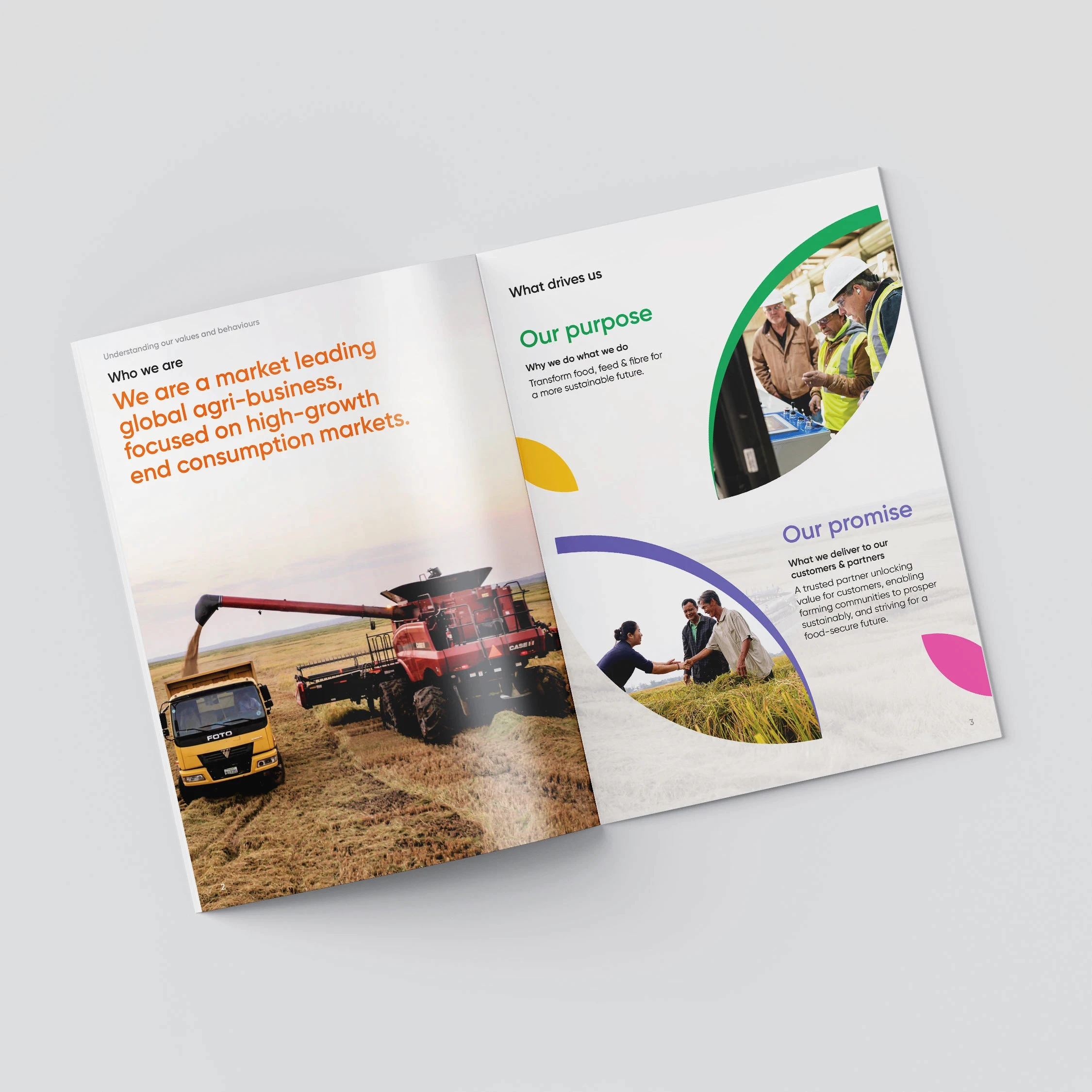
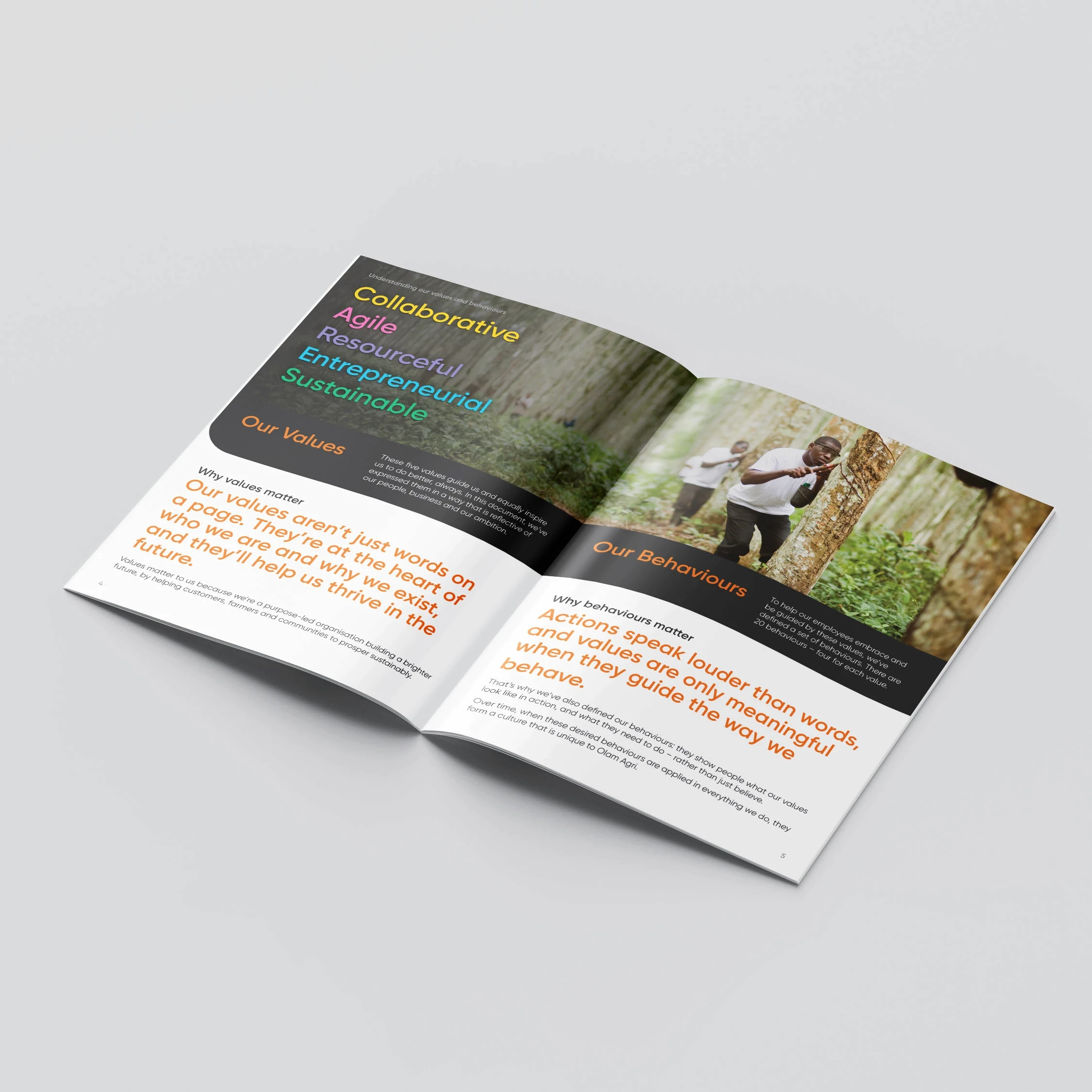
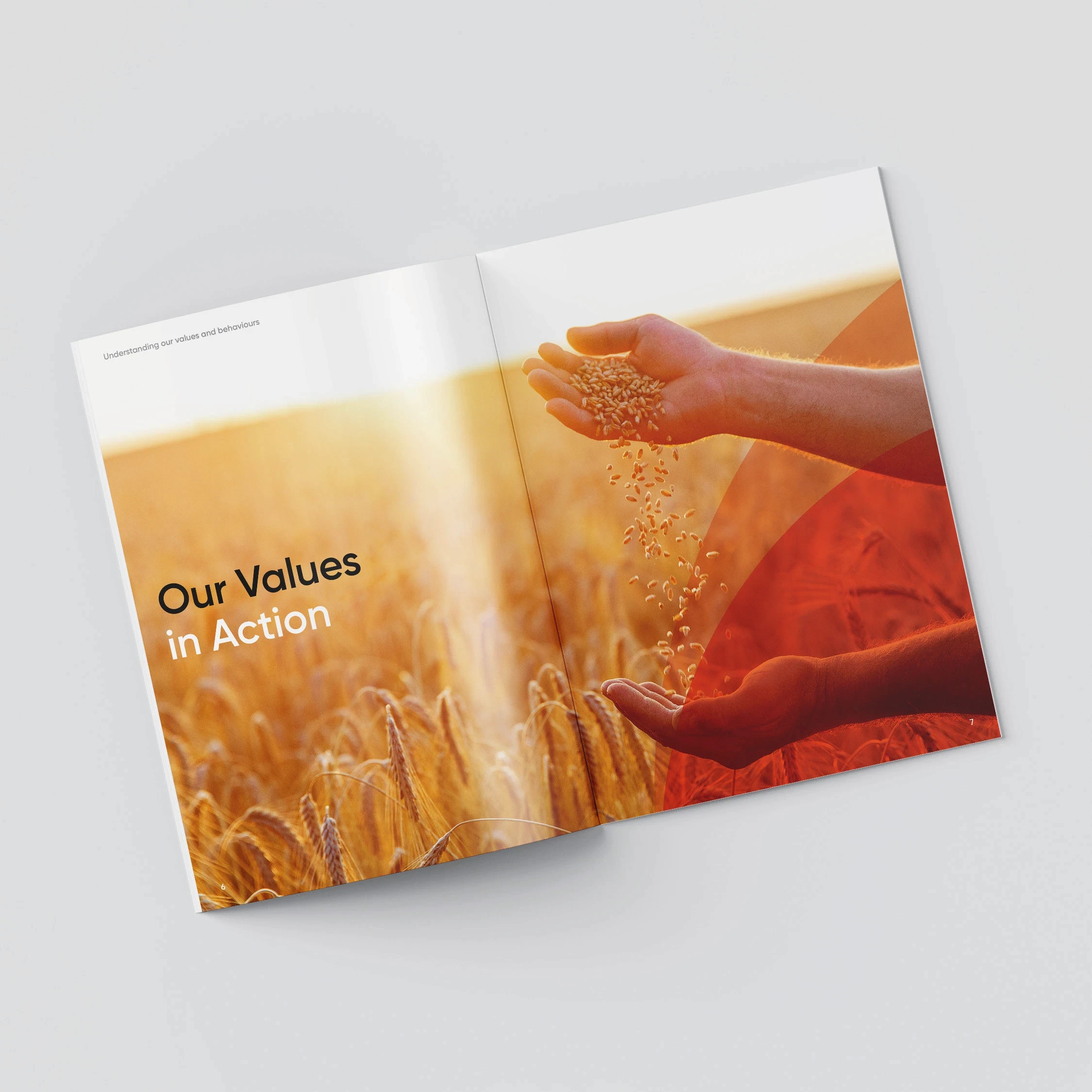
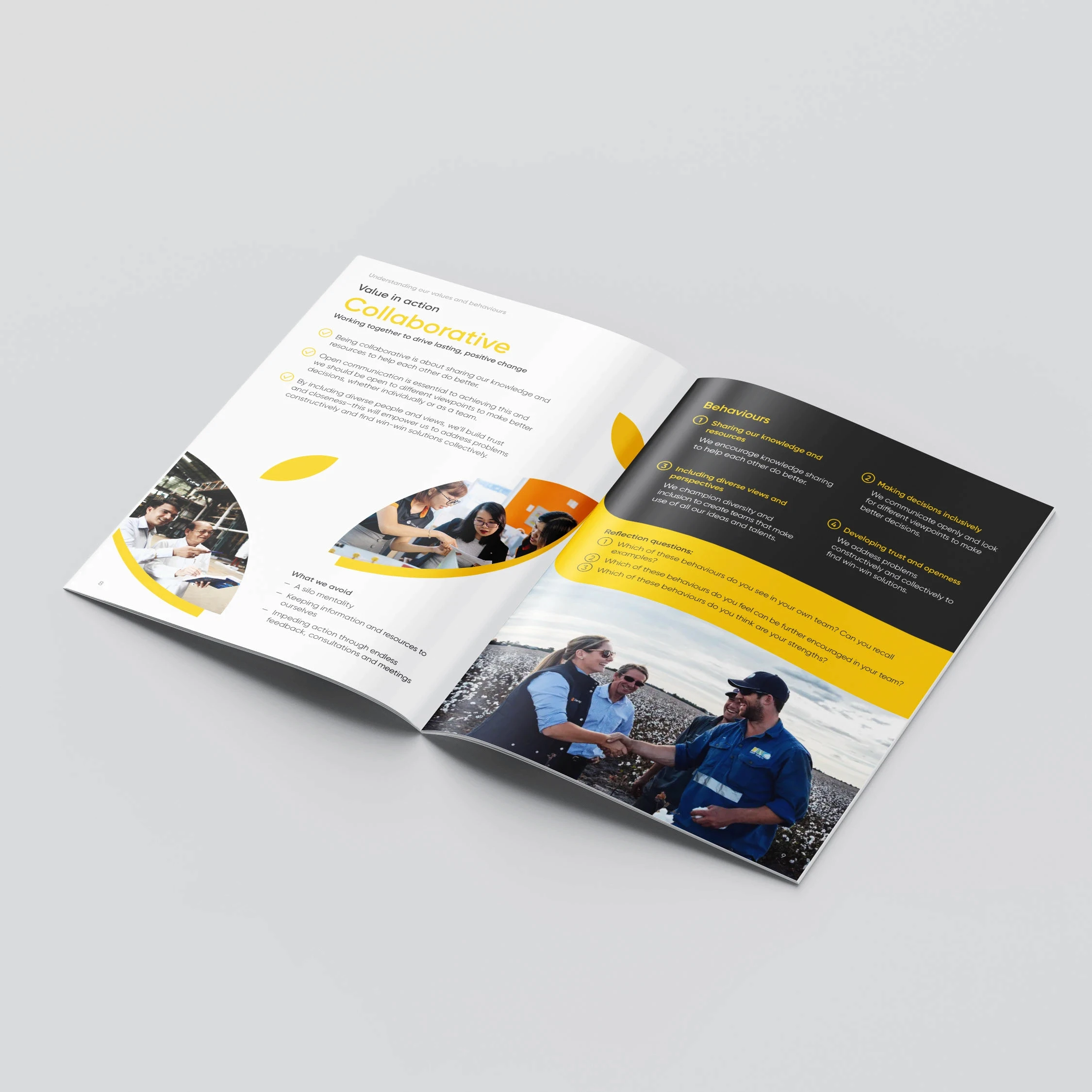
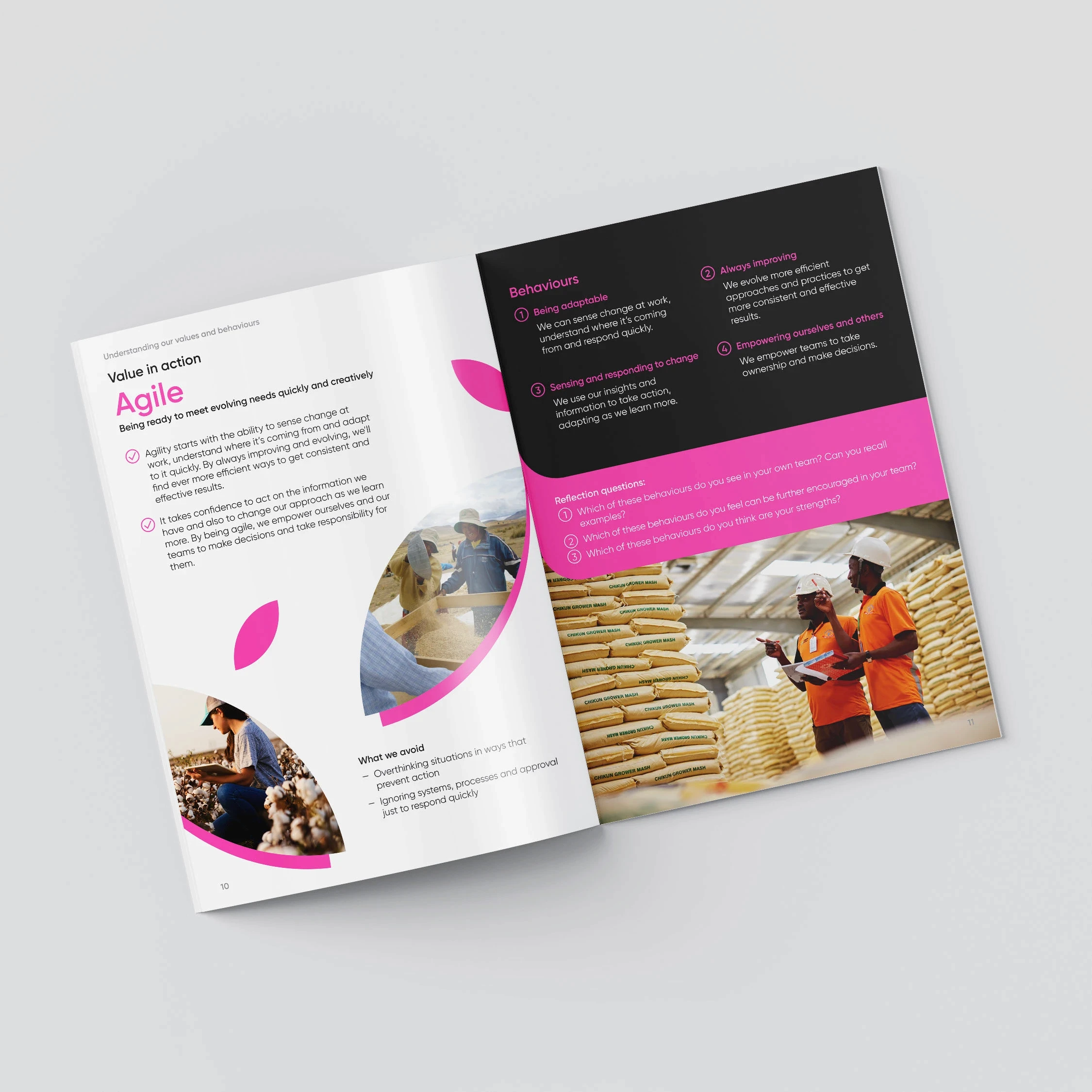
2. Conversation Cards & Game Mechanics
A portable deck-based system designed for team discussions and interactive learning
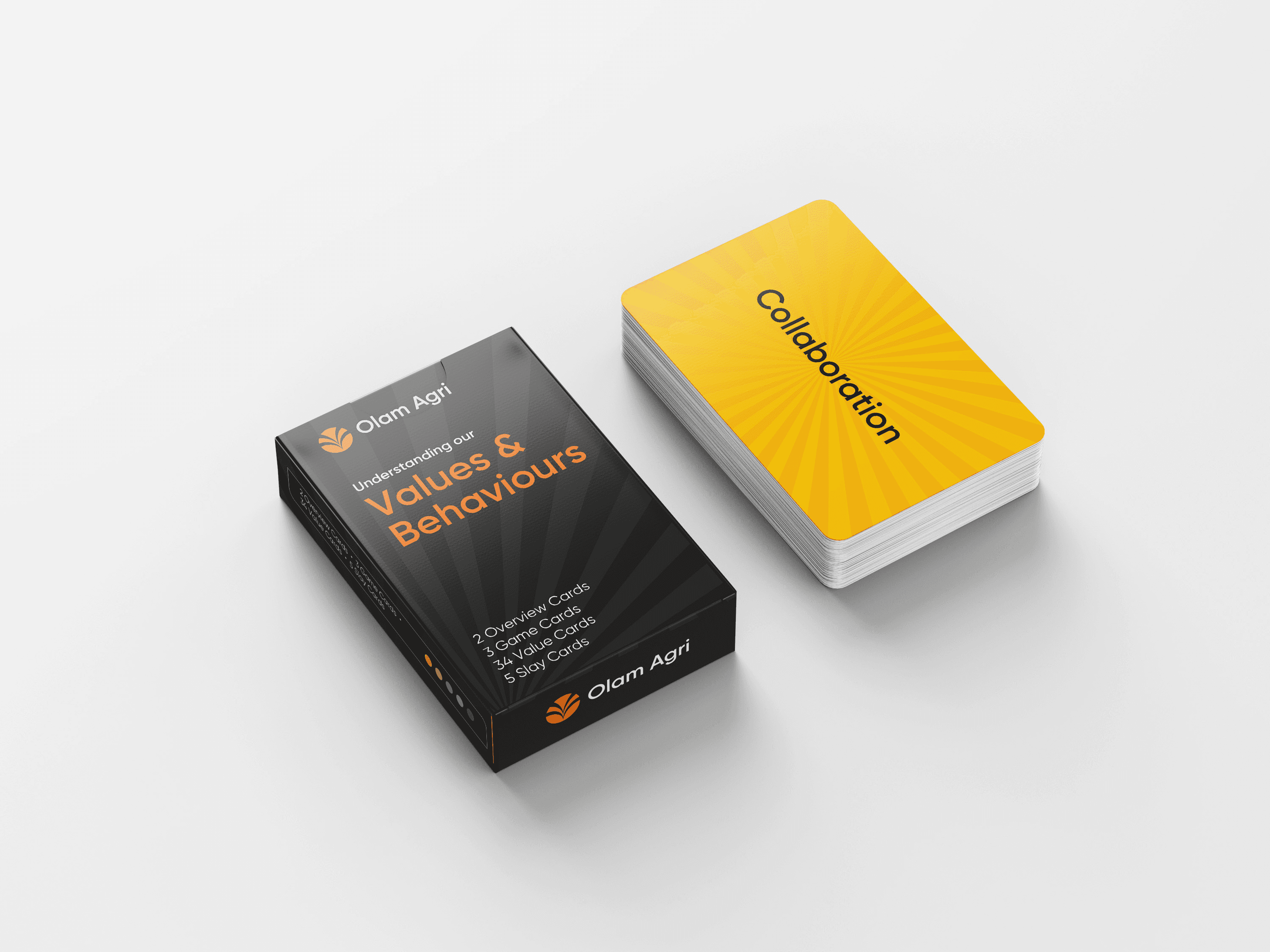
Value Cards (34 cards)
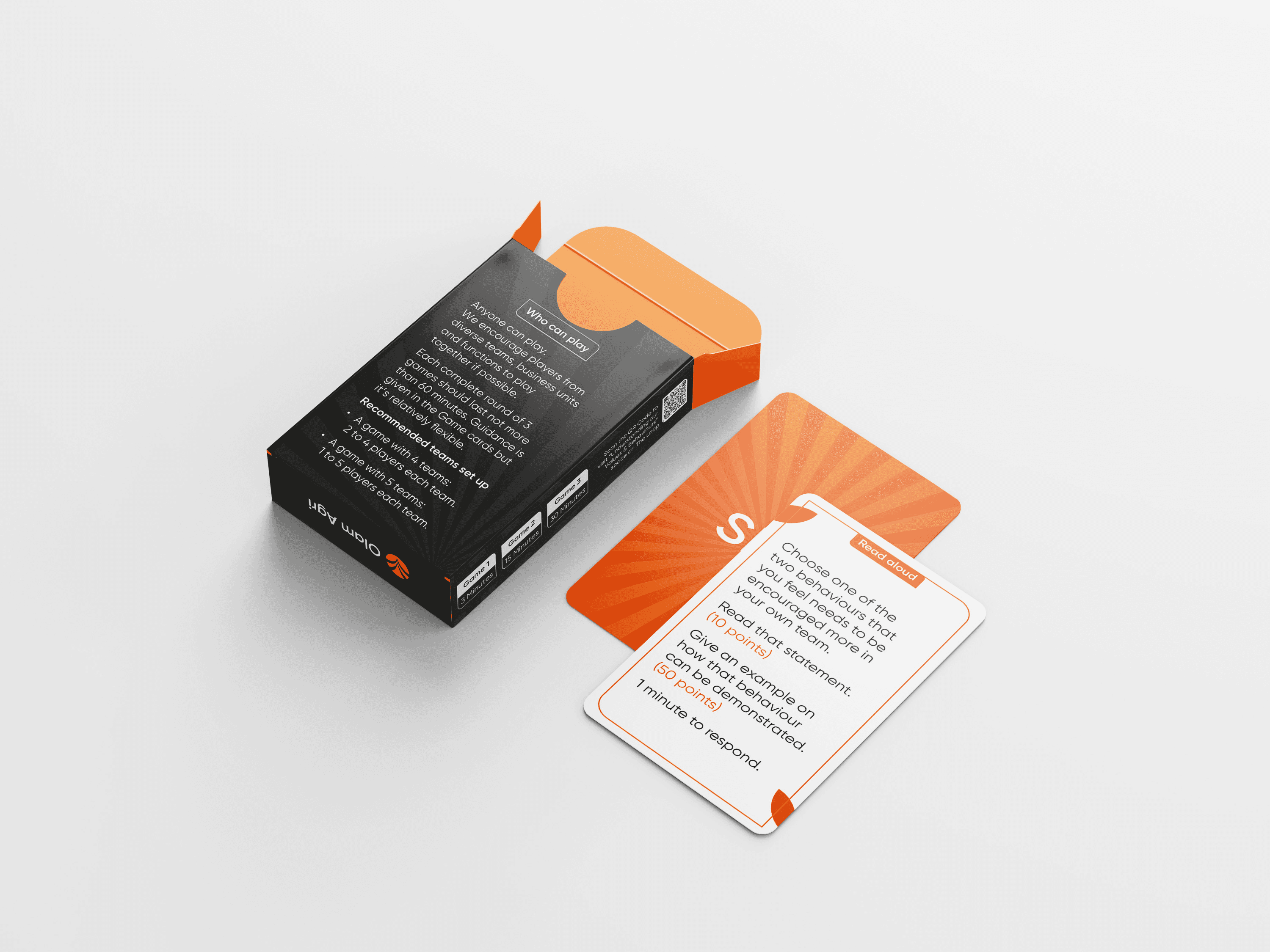
Slay Cards (15 cards)
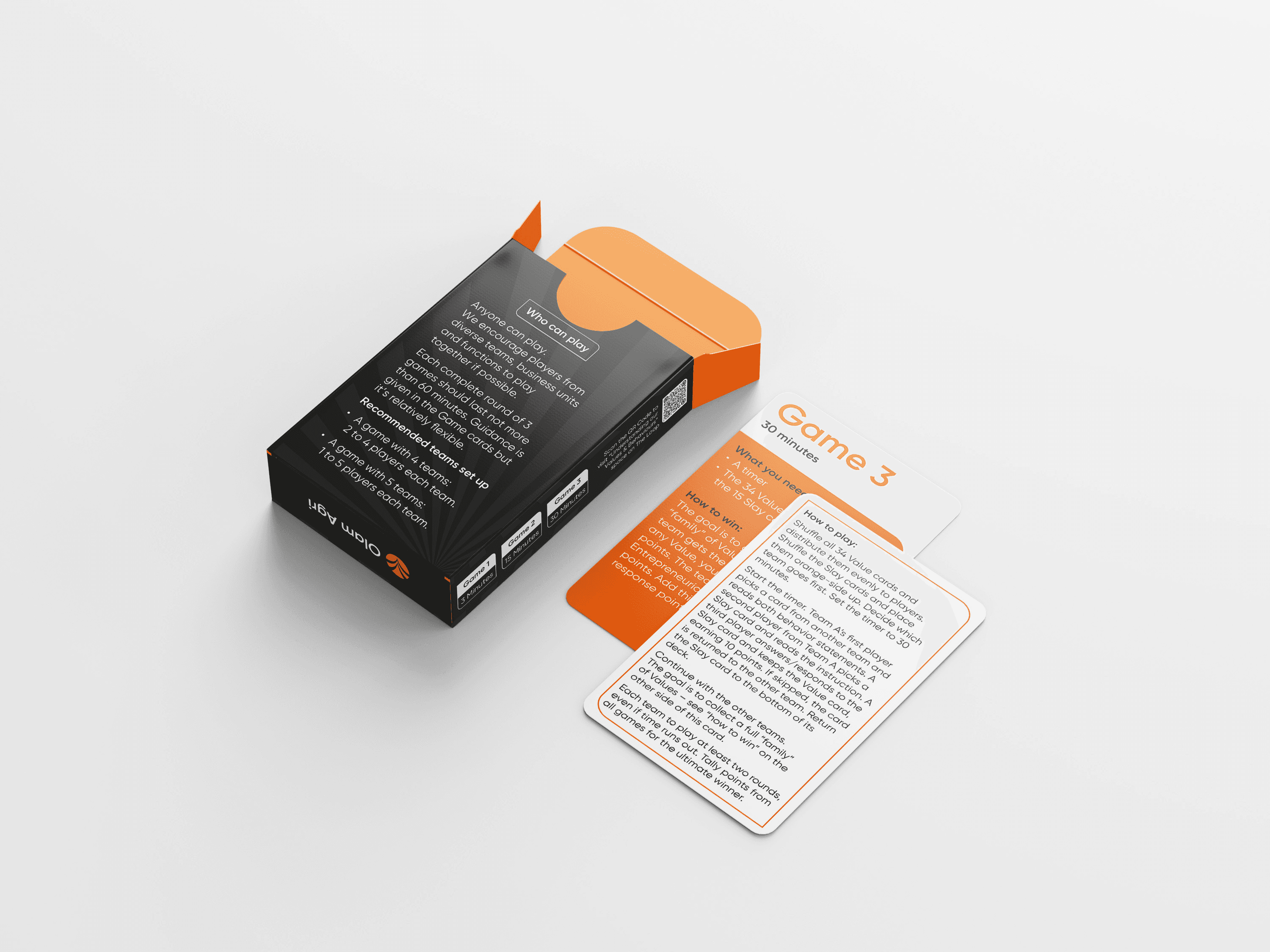
Game Cards
Rather than passive reading, teams earned points by responding to prompts that deepened reflection on how behaviours showed up in their work. This was experiential learning – values were internalised through playing, discussing, and winning.
3. Stickers for Personal Ownership
Custom stickers featuring each value, designed for employees to personalise their workspaces – laptops, desks, notebooks.
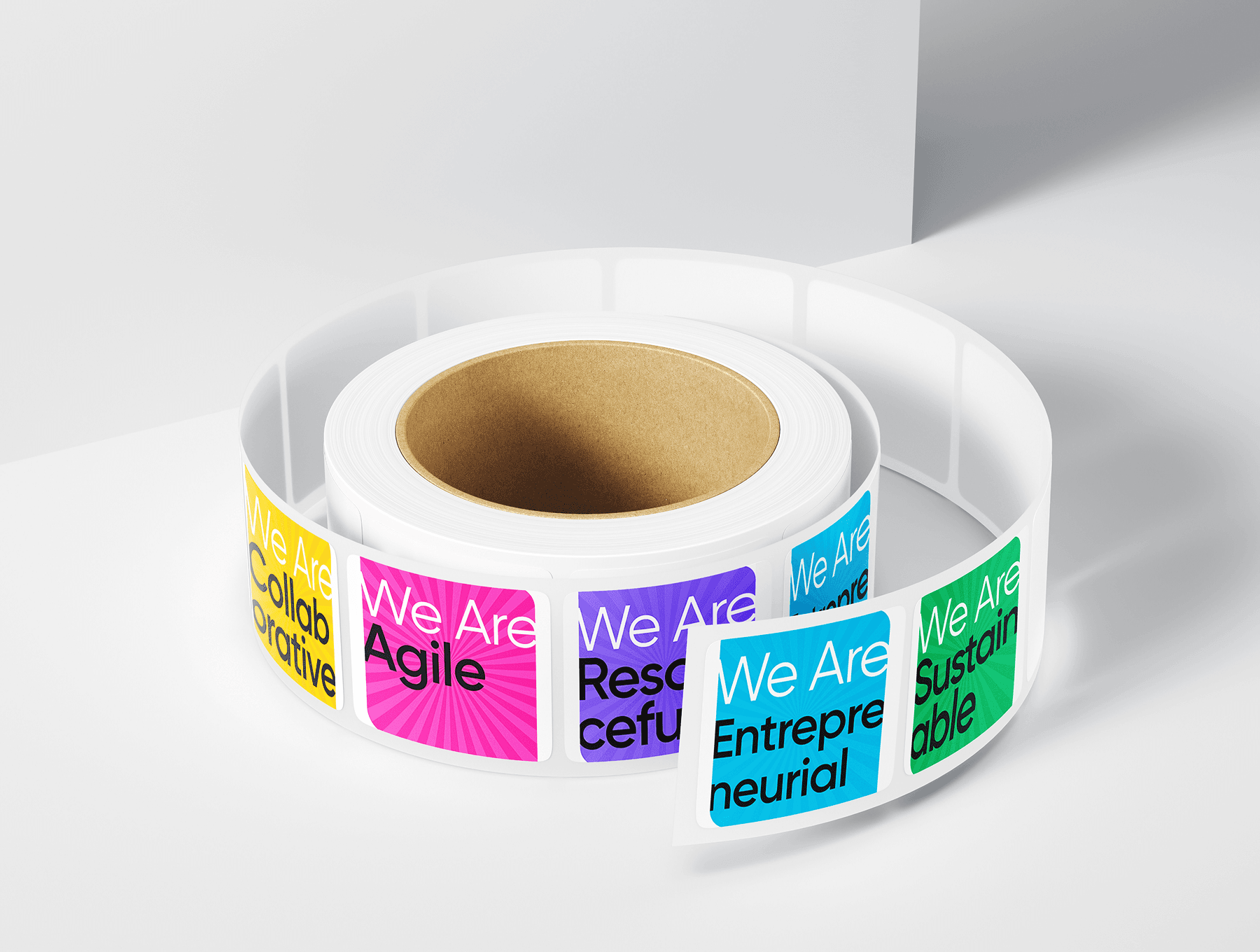
This shifted the narrative from "the company says these are important" to "I identify with this value." When someone puts a sticker on their laptop, they're making a statement about who they are.
Why This Matters: The Design Strategy
This project demonstrates three critical service design competencies
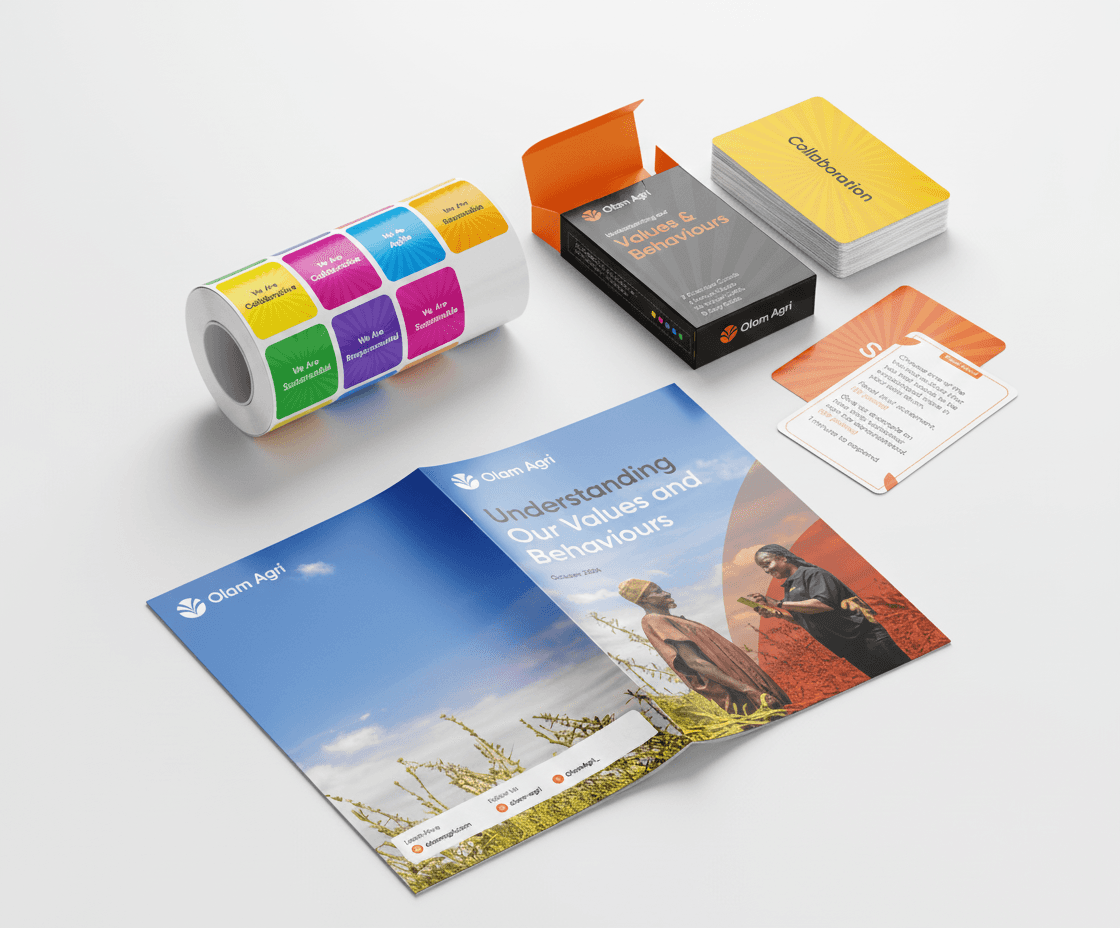
Translating Abstract to Tangible
I turned culture strategy into a physical reality. By creating a card game, booklets, and stickers, I materialised intangible values into experiences people could actually touch and feel.
Systemic Thinking
Moving beyond a "poster campaign," I designed a holistic ecosystem. Each touchpoint – from education to conversation – was part of a deliberate journey, not an isolated asset.
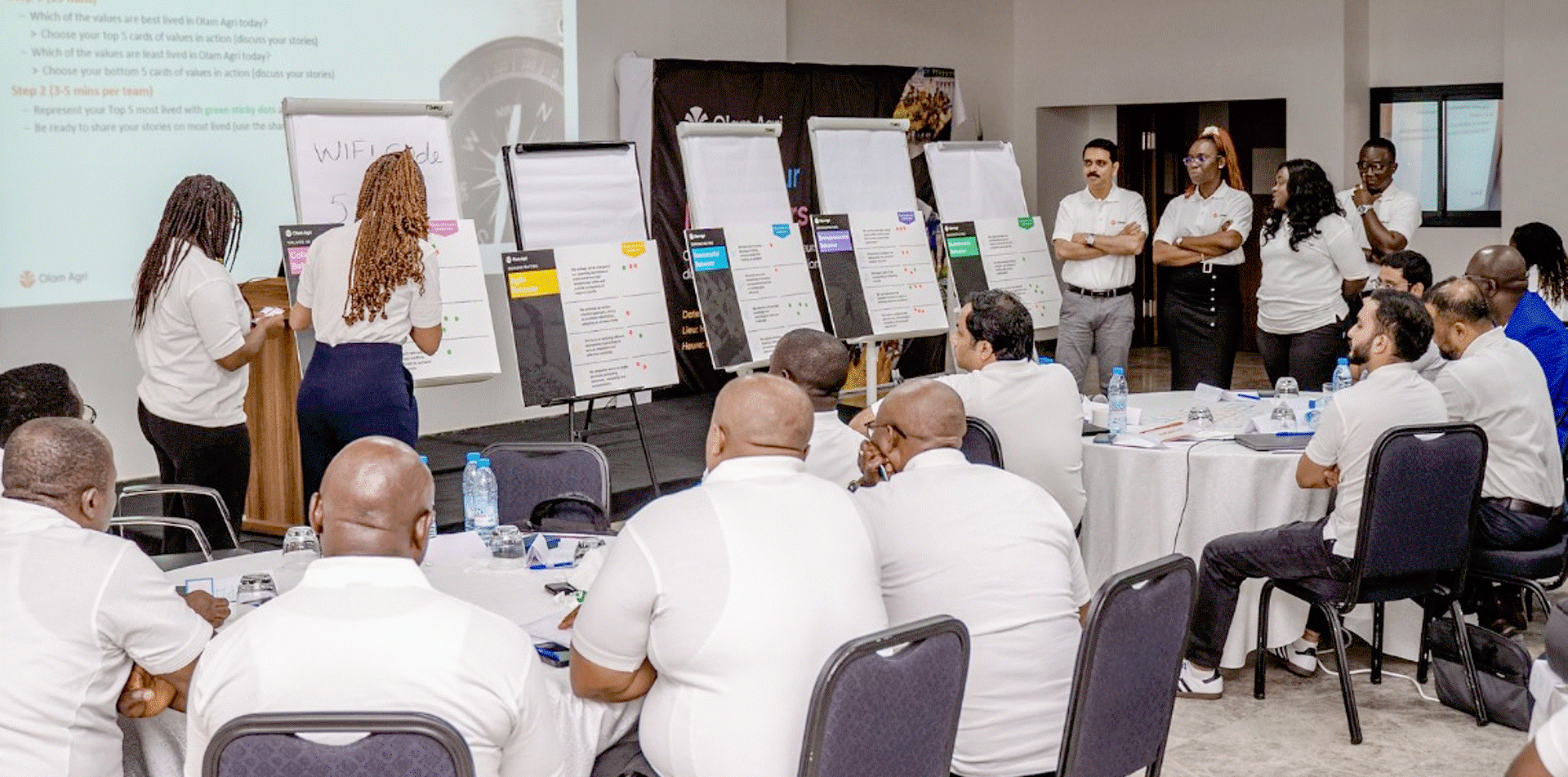
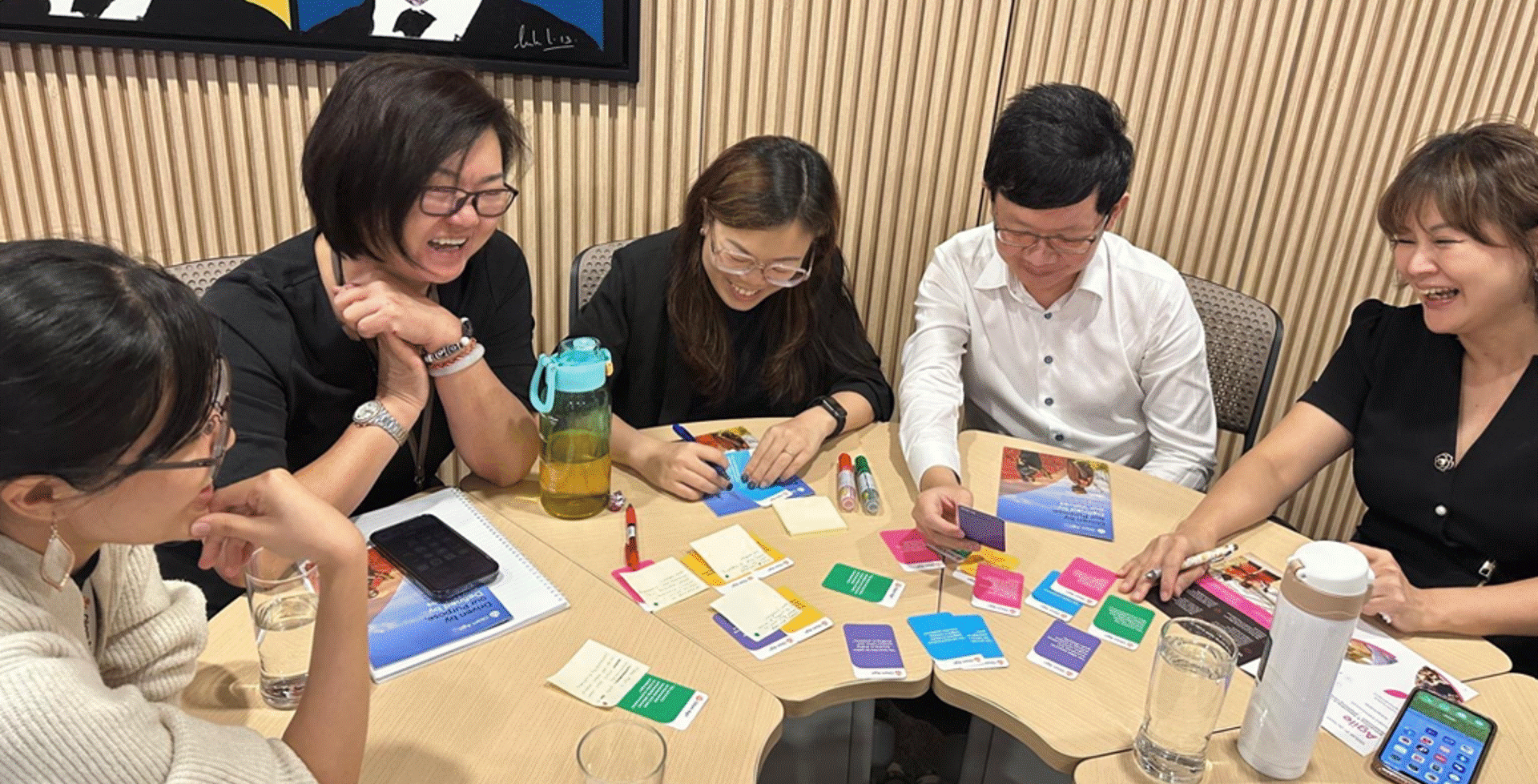
Co-Creative Participation
I shifted the focus from passive reading to active doing. By designing for reflection and discussion, I turned employees into active participants in the brand story.